
A driveway takes more abuse than almost any other slab on your property — vehicle weight, road salt, and freeze-thaw cycles every winter. We build ours to handle it, with proper base prep and reinforcement so you're not repairing cracks in three years.
Most driveway failures aren't the concrete's fault — they're a sub-base problem. Skipped excavation depth, poor compaction, or no drainage pitch lets water sit under the slab and heave it apart every winter. We excavate to proper depth, compact a graded aggregate base, and set a consistent pitch away from your garage and foundation before a single form goes down.
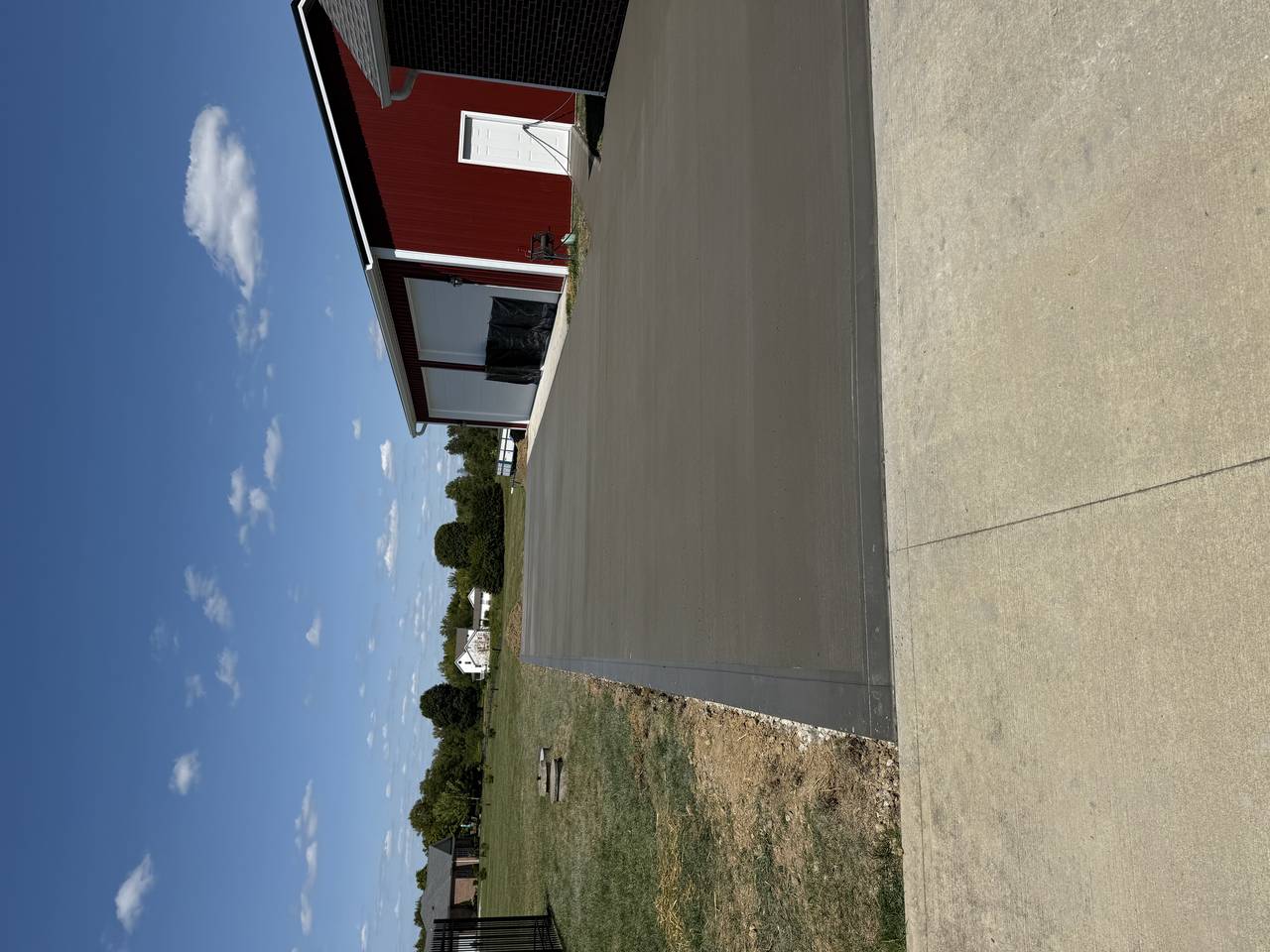
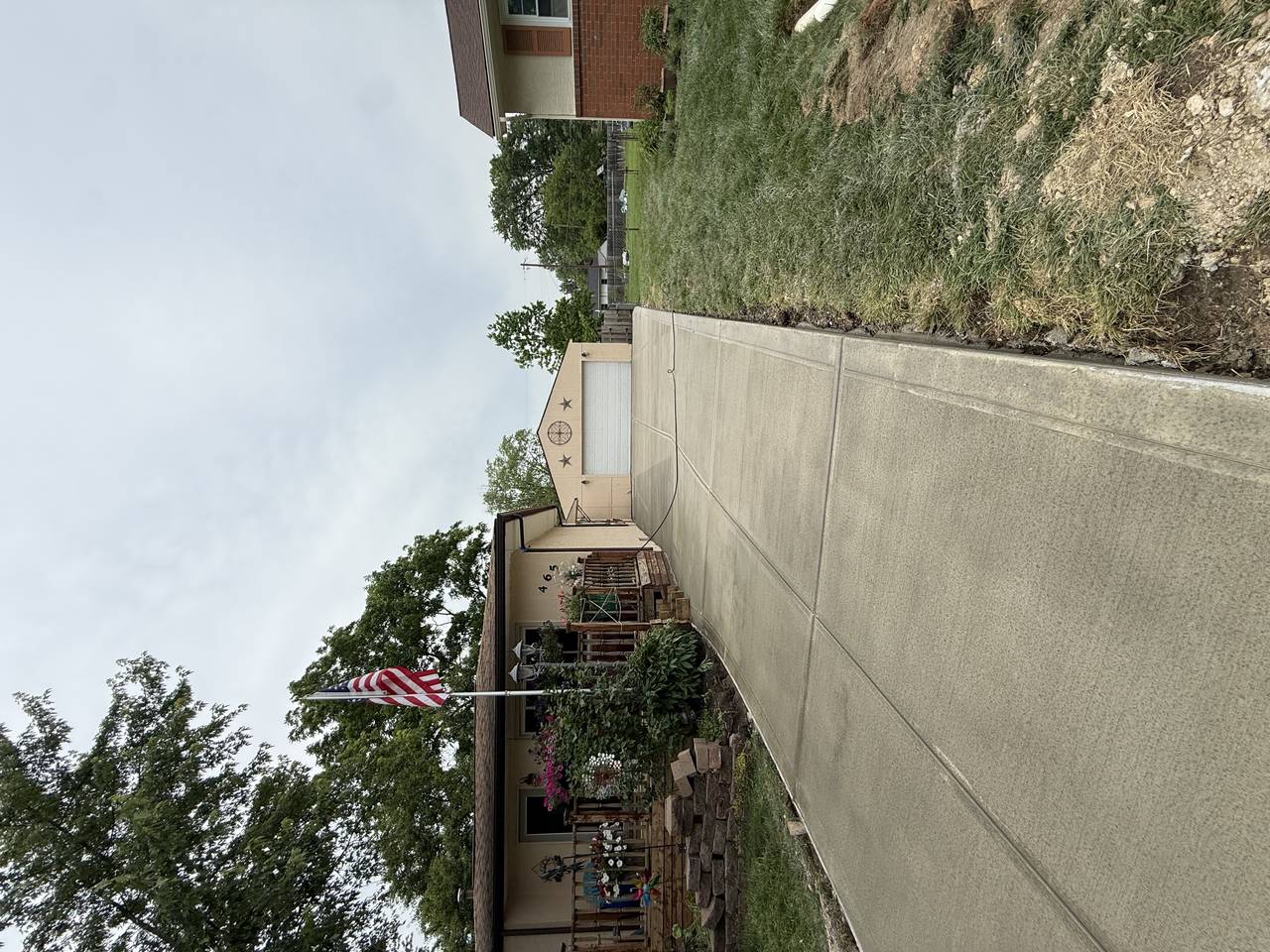
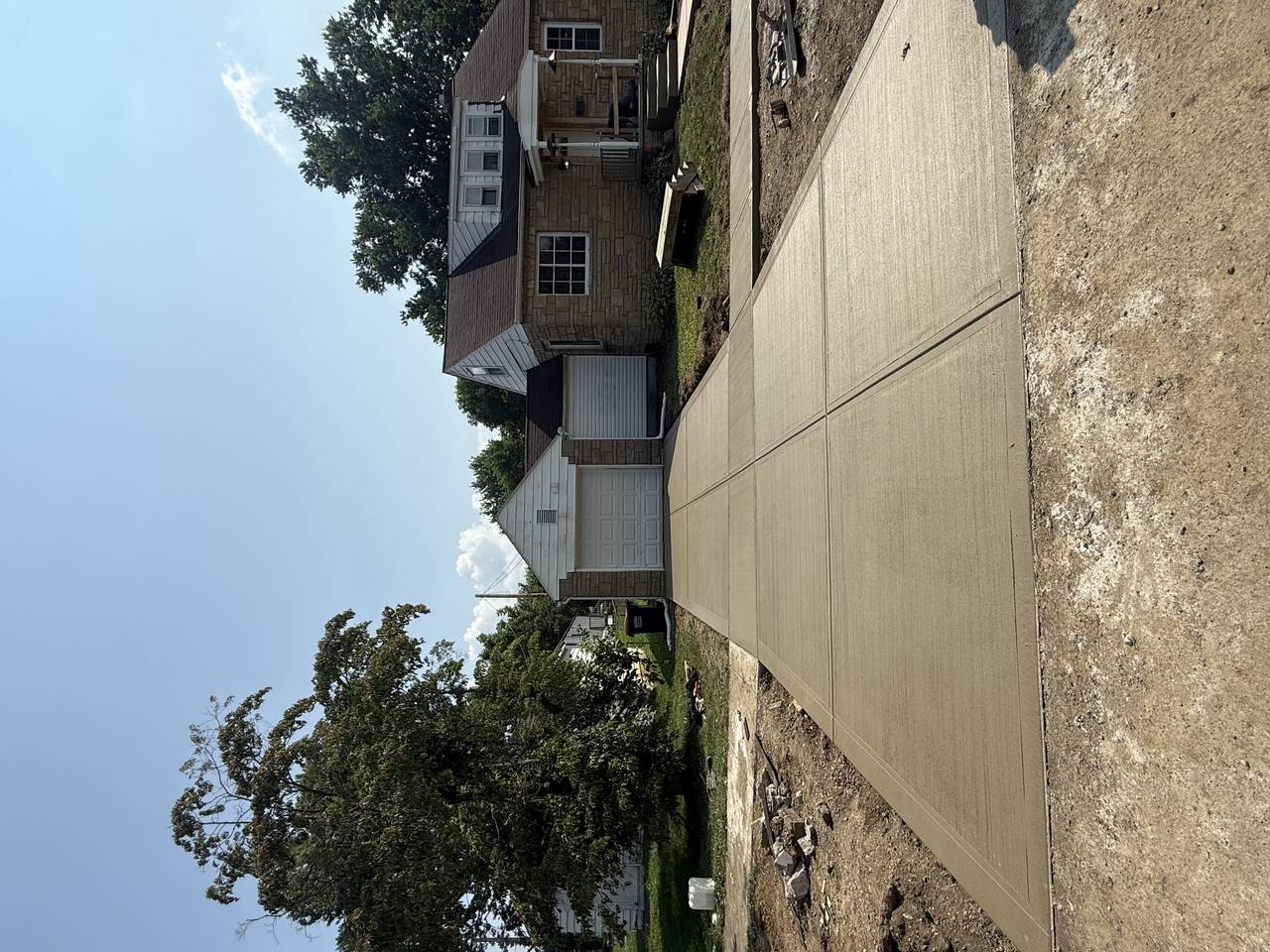
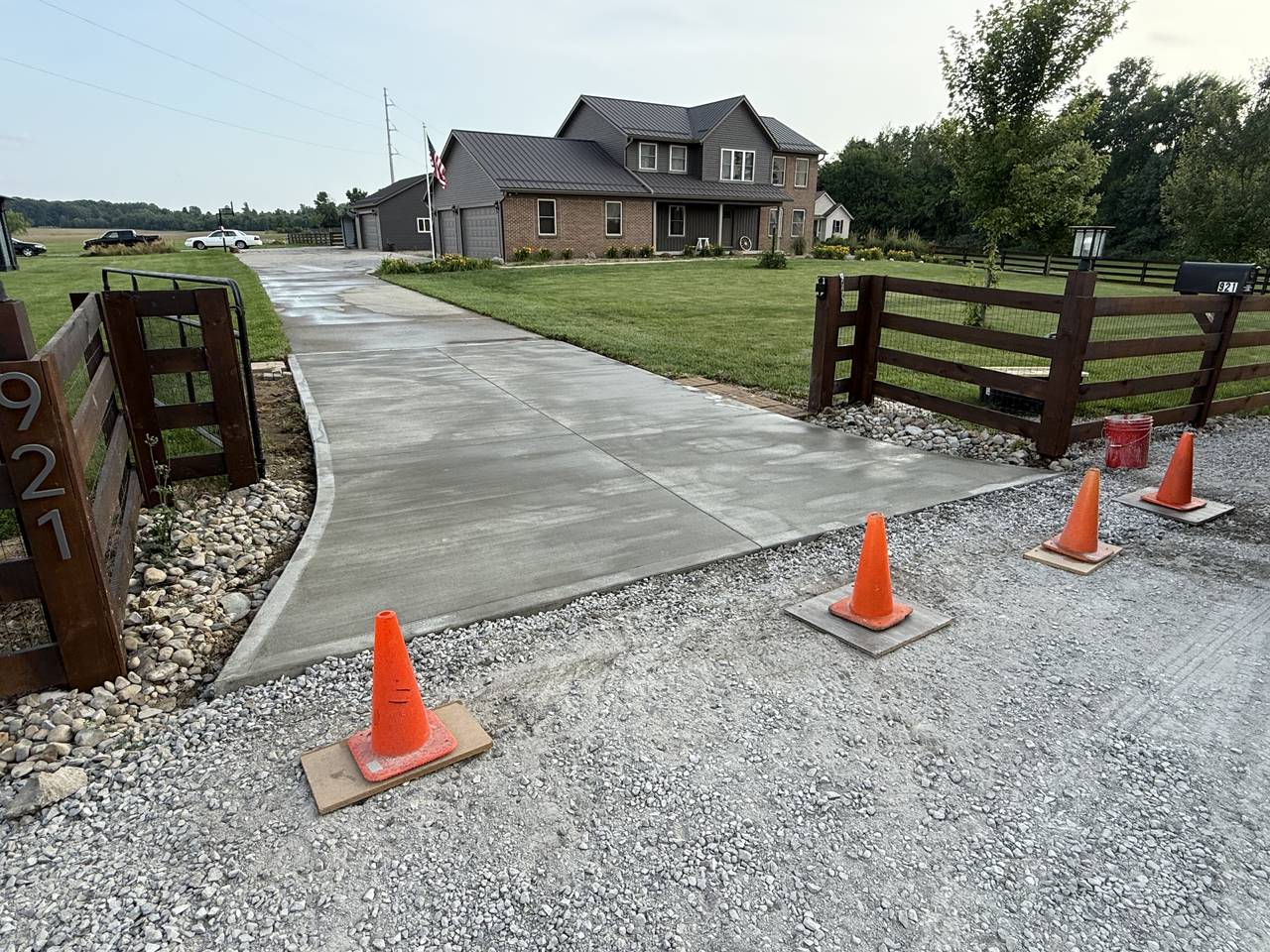
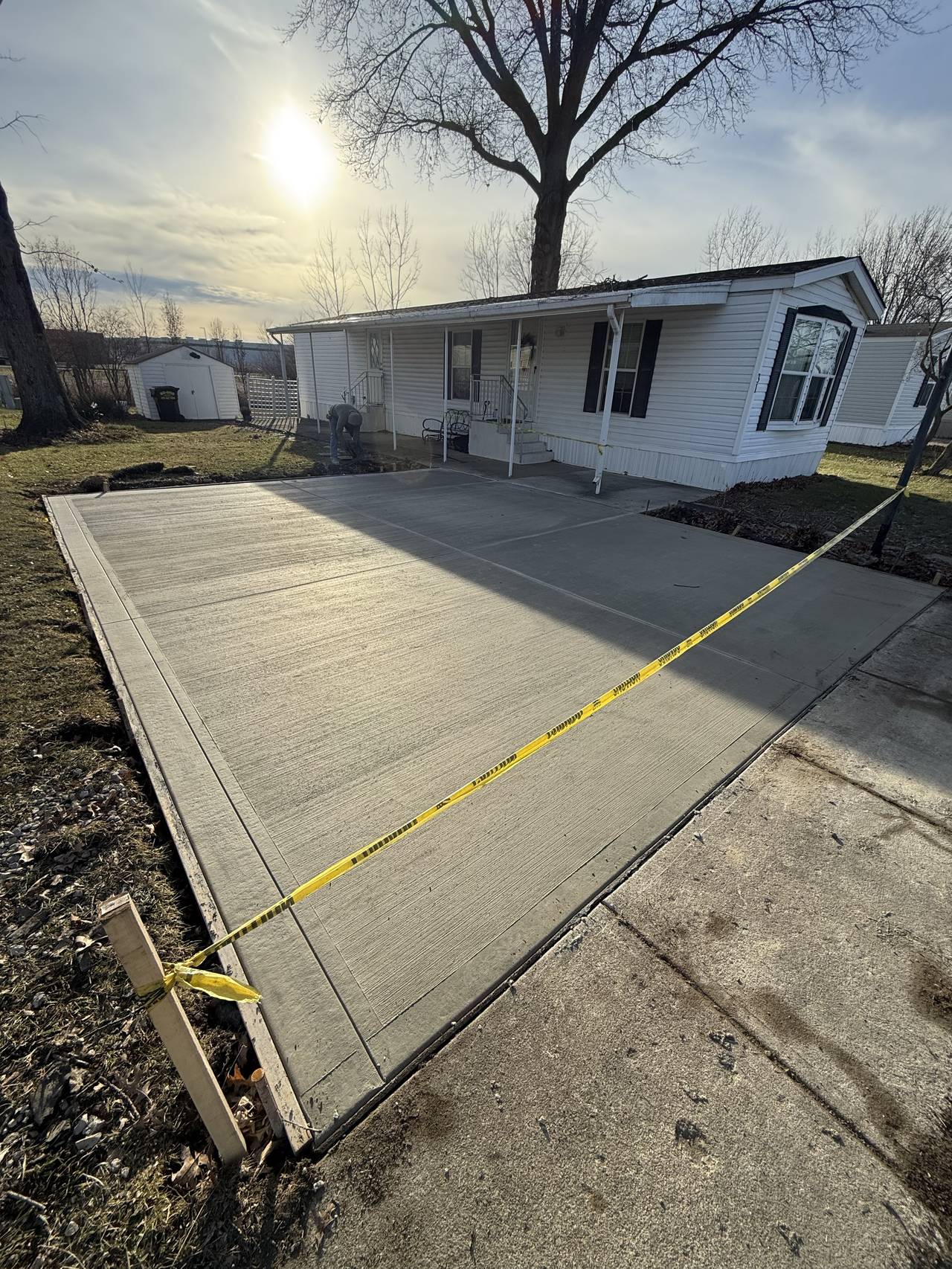
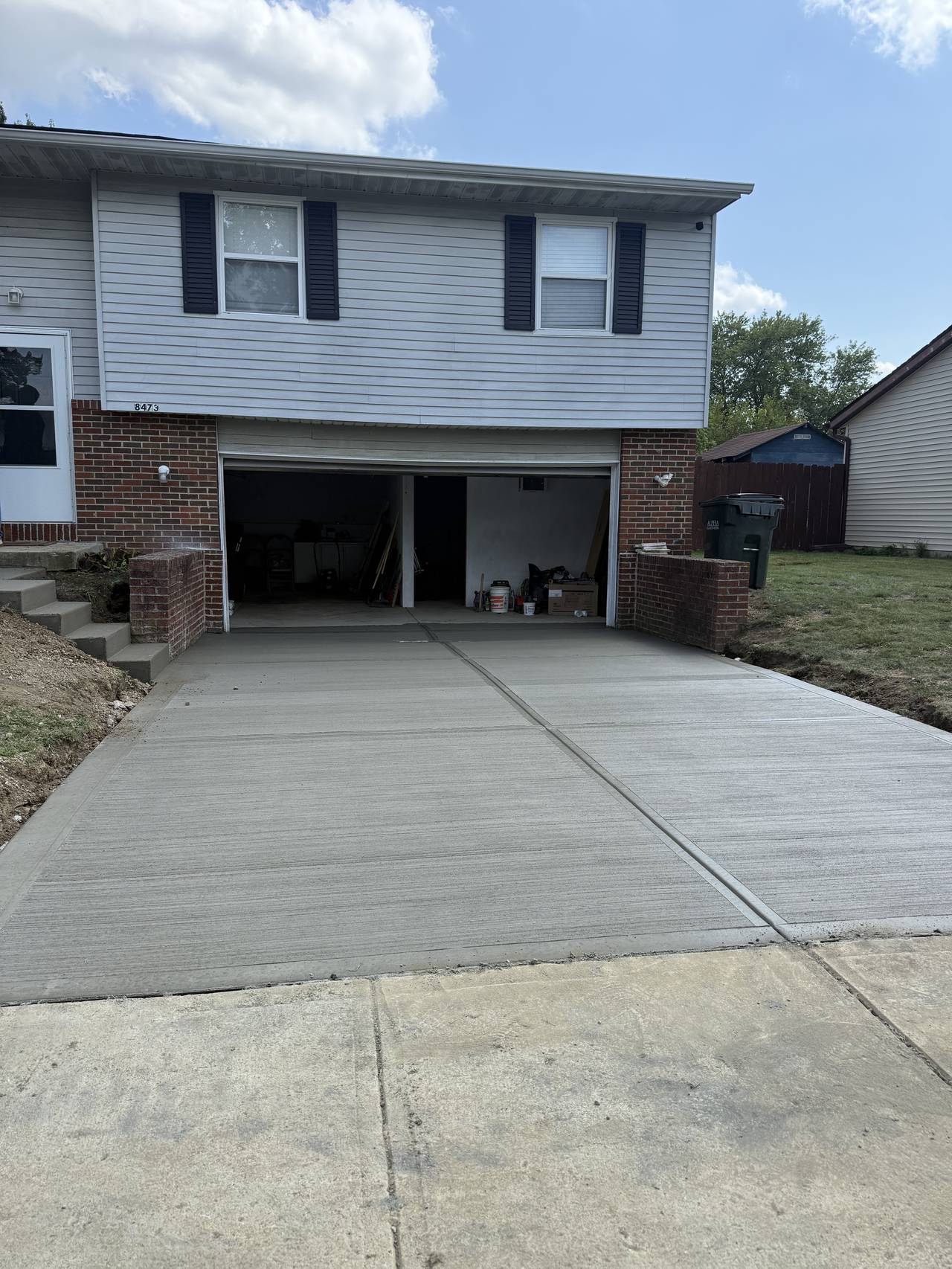
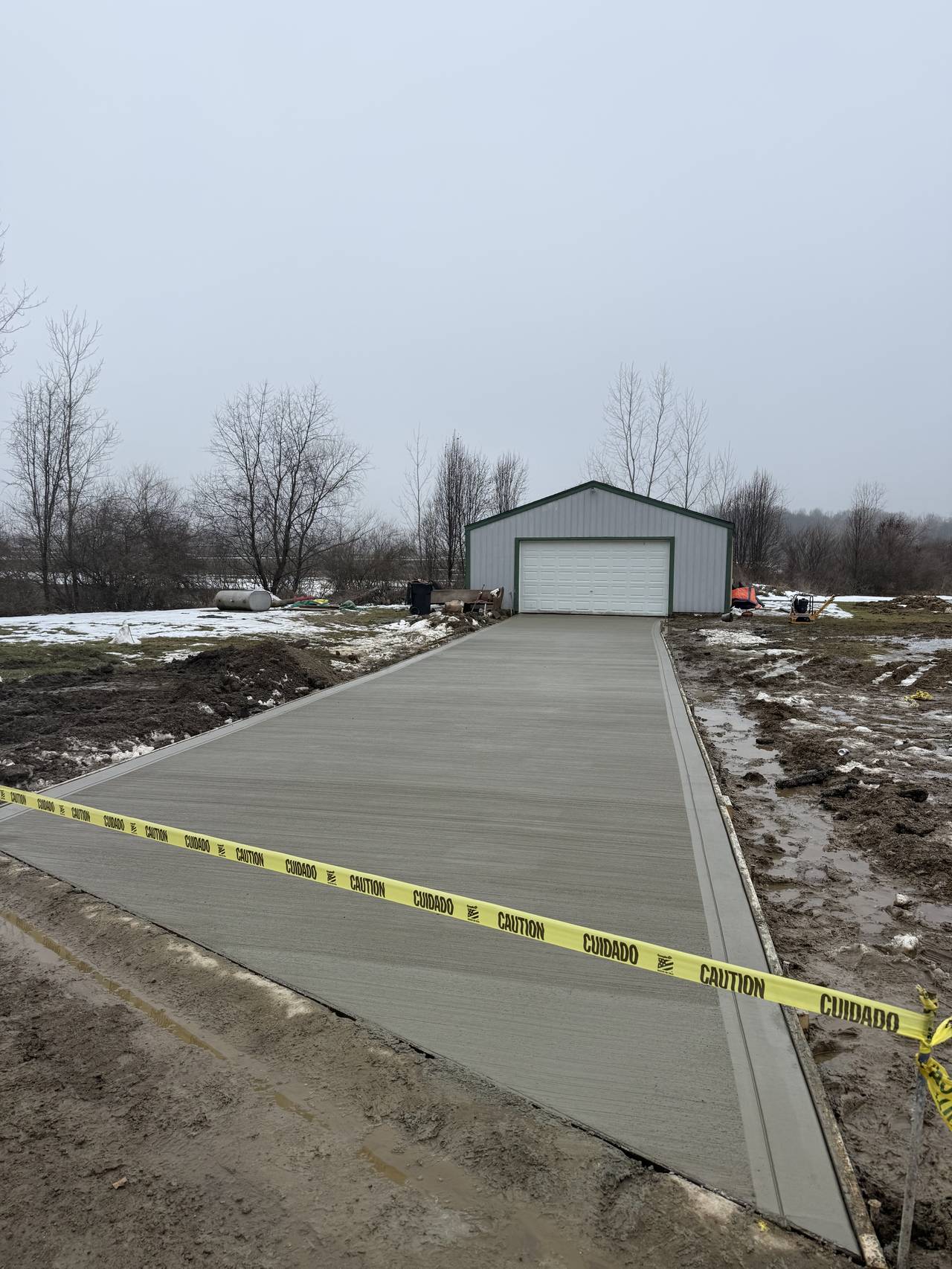
Standard broom finish is the most cost-effective and slip-resistant option for daily driving. Exposed aggregate gives a textured, upscale look using the natural stone in the mix. Stamped concrete driveways replicate brick, slate, or cobblestone patterns for a custom entrance at a fraction of paver installation cost.
Residential driveways are poured at a minimum of 4 inches, 5–6 inches for heavier vehicles or RVs, with fiber mesh or rebar reinforcement and properly spaced control joints to direct cracking to places you won't see it.
Standard residential driveways are 4 inches thick; if you park an RV, boat, or heavier truck regularly, we recommend 5–6 inches with added reinforcement.
Generally no — overlaying a cracked or heaving driveway just telegraphs the same problems through the new slab. We remove and replace down to a solid, compacted base.
Foot traffic is fine after 24–48 hours; wait a full 7 days before driving or parking vehicles on it so it reaches adequate strength.
Tell us about your project and we'll schedule a walkthrough — most quotes are delivered within 24–48 hours.
Request Estimate (614) 707-9907Get a free, no-pressure estimate from a crew that shows up when it says it will.